
 0
0



News & Events
Latest Updates & Industry Insights
- Home
- News
- Technical Knowledge
- JEL Wafer Search Calibration and Common Abnormality Analysis
JEL Wafer Search Calibration and Common Abnormality Analysis
June 05,2026
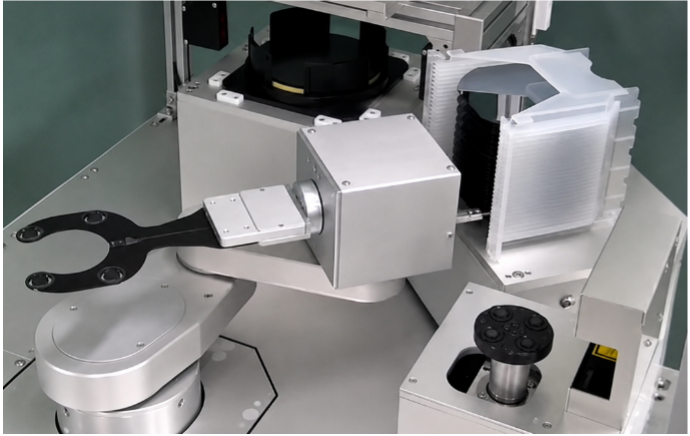
Wafer Search (Mapping) is a critical function within wafer transfer systems used to detect the position, quantity, and abnormal status of wafers. Correct calibration (Teaching) and parameter configuration directly impact mapping accuracy and equipment stability.
Why is Teaching (Calibration) Required?
The purpose of teaching is to establish reference positions between the sensor and the cassette, enabling the system to accurately determine the status of wafers in each slot. Incorrect teaching can lead to missed detections, false positives, or even trigger abnormal alarms such as Cross Slot (slanted insertion) or Double Wafer (overlapping wafers).Common Causes of Mapping Misdetection
Sensor Installation and Optical Issues- The optical axis is obstructed by the cassette or surrounding components.
- Sensor angle deviation, resulting in insufficient reflection signal intensity.
- False detection of the cassette frame or other non-wafer objects.
- Mapping speed is too fast, causing errors in wafer thickness evaluation.
- Gate Width (WWG) is set too wide, causing overlap in the determination zones of upper and lower slots.
- Incorrect start position setting, triggering a Mapping Error or E08 abnormality.
- Insufficient sensor delay time.
- Loose signal cables or poor electrical contact.
- Failure to re-calibrate after changes to wafer thickness or cassette specifications.
Key Points During Teaching
- Verify that the sensor installation position, optical axis, and reflection angle are correct.
- Synchronize and update corresponding mapping parameters when wafer thickness or cassette specifications are changed.
- Be sure to write data to the controller after completing teaching to prevent settings from being lost upon reboot.
- Periodically check the status of sensors, cables, and mechanical structures to maintain optimal detection accuracy.
Technical Recommendations
Practical experience indicates that over 90% of mapping abnormalities can be quickly resolved by inspecting the "sensor status," "parameter settings," and "mechanical position."Establishing a proper teaching workflow and routine maintenance mechanism can effectively enhance equipment utilization (uptime) and wafer handling reliability.

